The Kitchen Bench
Philips 7000 Series Pasta Maker HR2660/03 Review (2027)
An evidence-based look at the Philips 7000 Series Pasta Maker HR2660/03: what it is, what to check before buying, who it suits, and the alternatives worth comparing.
By The Kitchen Bench Research Team · Updated for 2027 · Independent · Reader-supported · No paid placements
✓ Specs checked
✓ Claims verified
✓ No paid placements
✓ Sources cited
On this page
Bench take
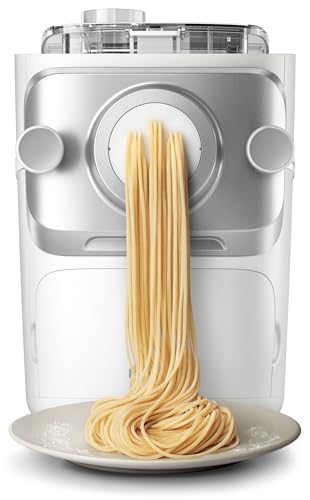
The Philips 7000 Series Pasta Maker HR2660/03 is Philips’s entry in the pasta makers category. On the category’s key decisions — roller vs. extruder, roller width, motor vs. hand crank, attachment vs. standalone — it deserves a place on any shortlist, provided the checks below confirm it fits your kitchen, your batch size and your care tolerance. This review does not claim hands-on laboratory testing: it assesses the product from its category, its maker’s line and the specifications buyers should verify on the manufacturer sheet for the exact variant they are buying.
Check price on Amazon →Compare all pasta makers
Prices and availability change — the retailer page shows the current price for your exact variant. If the variant, size or colour differs from what you wanted, do not order it on price alone.
What this product is
A pasta maker rolls and cuts fresh dough into sheets, fettuccine, spaghetti and more. Roller machines suit hands-on cooks; extruder machines push dough through dies for shapes rollers cannot make. Within that category, the Philips 7000 Series Pasta Maker HR2660/03 sits as Philips’s offering. The name itself tells you the most reliable facts — brand, product line and, where stated, size or capacity. Anything beyond that — exact dimensions, materials, warranty terms, care instructions — should be confirmed on the manufacturer sheet for your exact variant, because retailer listings for the same product frequently disagree.
Inside the pasta maker
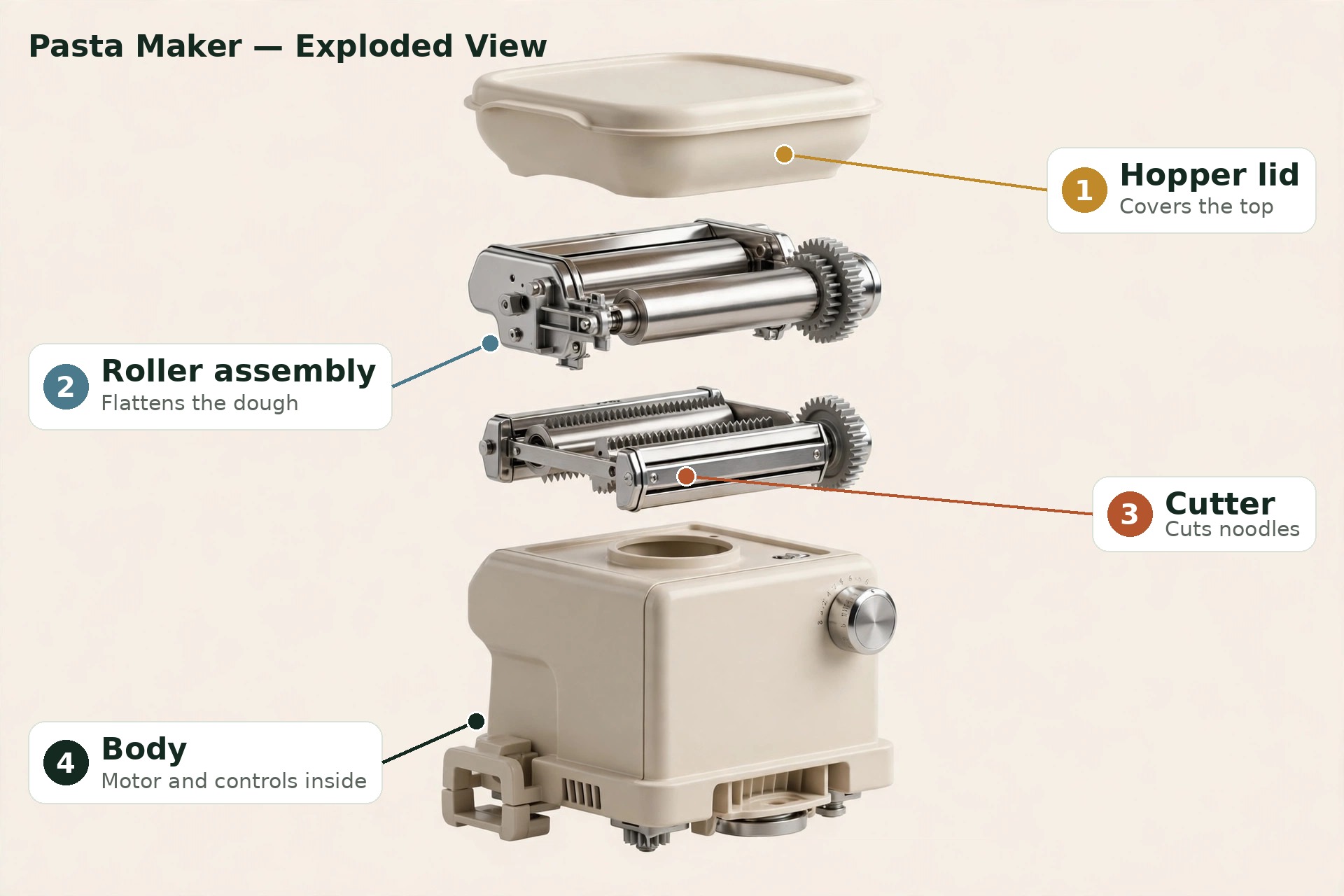
Illustrative exploded view — parts shown separated so you can see how it fits together. Not a photo of this exact product.
Key decisions for this category
Roller vs. extruder
Rollers make flat pasta and filled pasta sheets beautifully. Extruders make penne, rigatoni and other hollow shapes rollers cannot.
Roller width
A wider roller makes lasagne sheets in fewer passes. A narrow roller is fine for noodles.
Motor vs. hand crank
Hand cranks are simple and reliable. Motors save effort on large batches but add cost and a part that can fail.
Attachment vs. standalone
Mixer attachments save space if you own the mixer. Standalone machines suit cooks without one.
What to verify before buying
Before you buy the Philips 7000 Series Pasta Maker HR2660/03
- ✓ Roller or extruder type for the shapes you want
- ✓ Roller width for your sheet needs
- ✓ Motor or hand crank for your batch size
- ✓ How it cleans — dough in gears is the enemy
Where the manufacturer sheet and a retailer listing conflict, this site follows the manufacturer sheet and flags the conflict. Never buy a pasta maker on a single specification from a single listing.
Pros and cons — at a glance
These are the honest trade-offs for this type of pasta maker, not a score. The strengths are what the category does well when the size and care needs fit; the watch-outs are the checks that decide whether this particular pasta maker fits your kitchen.
What it does well
- ✓ Fits the pasta makers use case when roller vs. extruder and roller width are checked first.
- ✓ From Philips, a maker whose line is built around this category — spare parts, care guidance and variant information are easier to verify than for a no-name listing.
- ✓ The name states the key facts (brand, line and, where stated, size) — so you can match it to the manufacturer sheet before ordering.
What to watch
- ✗ Dough tears in the roller — check this before buying, not after unboxing.
- ✗ Sheets stick together — check this before buying, not after unboxing.
- ✗ Extruder dough jams — check this before buying, not after unboxing.
- ✗ Retailer listings for the same product frequently disagree on size, capacity or care — verify the exact variant on the manufacturer sheet.
How to buy it right — in 5 steps
- 1. Measure first. Check your counter, hob, cupboard and storage against the manufacturer dimensions for the exact variant — not the roundup photo.
- 2. Match the batch. Size and capacity should fit your usual cooking, not your largest party. A pasta maker that is too big wastes space; one that is too small forces second batches.
- 3. Check the variant. Colour, size and included accessories change the price and the fit. Confirm the variant name on the retailer page matches the one you checked.
- 4. Run the verify checks below. Roller or extruder type for the shapes you want; Roller width for your sheet needs; Motor or hand crank for your batch size; How it cleans — dough in gears is the enemy. If any check fails, pick an alternative from the list below instead of hoping it will work out.
- 5. Check returns before ordering. Confirm the retailer return window for your variant, so a wrong size or a damaged arrival is a swap, not a loss.
Check price for the Philips 7000 Series Pasta Maker HR2660/03 →
VIP pick — the winner is inside2027
Still deciding? Reveal the No. 1 pick.
The ranked roundup hides its winner until you tap — then shows the full ranking, the checks, and what to verify before buying.
Best Pasta Makers →Browse all reviews
Independent · Reader-supported · No paid placements — every pick links to its full review.
 The winner is inside
Common mistakes to avoid
Dough tears in the roller
Dough too dry, or jumped too many settings at once. Start wide, fold, rest, and narrow gradually.
Sheets stick together
Dust with flour or semolina between passes, and do not stack warm sheets.
Extruder dough jams
Extruder dough must be crumbly, not smooth. A smooth roller dough clogs dies.
Noodles clump after cutting
Dry them briefly on a rack or floured tray before cooking, and cook in plenty of water.
Who it suits — and who should skip it
Best for
Cooks choosing pasta makers who prioritise roller vs. extruder and roller width, and who have verified the product’s size, capacity and care needs against their kitchen.
Skip if
You need a different size or capacity, you cannot meet its care or cleaning needs, or the verified specifications do not match your hob, counter or storage. In that case, compare the alternatives below before deciding.
Also consider
Pasta Makers
Emeril Lagasse Pasta Beyond
Full review — what to verify before buying, who it suits, and the alternatives worth comparing.
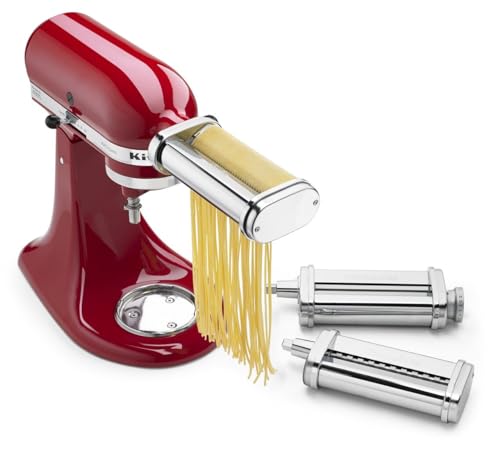
Pasta Makers
KitchenAid Pasta Press Ksmpexta
Full review — what to verify before buying, who it suits, and the alternatives worth comparing.
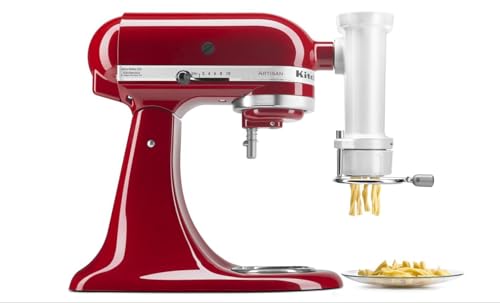
Pasta Makers
Philips Pasta Maker Plus
Full review — what to verify before buying, who it suits, and the alternatives worth comparing.
In this category
The full pasta makers cluster — the hub, the ranked best list, the buying guide, the problems-and-fixes article, and the use-case picks for this category.
Frequently asked questions
Is fresh pasta worth the effort?
For filled pasta and delicate noodles, yes. For everyday spaghetti, dried pasta is excellent and far faster.
What flour should I use?
00 flour or semolina blends give the best texture. All-purpose works but is less silky.
How do I dry fresh pasta?
Briefly on a rack or floured tray. Fully dried pasta keeps longer but cooks differently from fresh.
Ready to buy?
If the checks above pass — size, capacity, care and variant all match your kitchen — this is the point to order. If any check fails, go back to the alternatives below instead of buying on hope.