The Kitchen Bench
Cast Iron Skillets Problems and Fixes in 2027
The most common cast iron skillets problems, why they happen, and the fix to try first — plus how to tell when repair is worth it and when replacement is smarter.
By The Kitchen Bench Research Team · Updated for 2027 · Independent · Reader-supported · No paid placements
✓ Specs checked
✓ Claims verified
✓ No paid placements
✓ Sources cited
On this page
Common problems and fixes
Food sticks
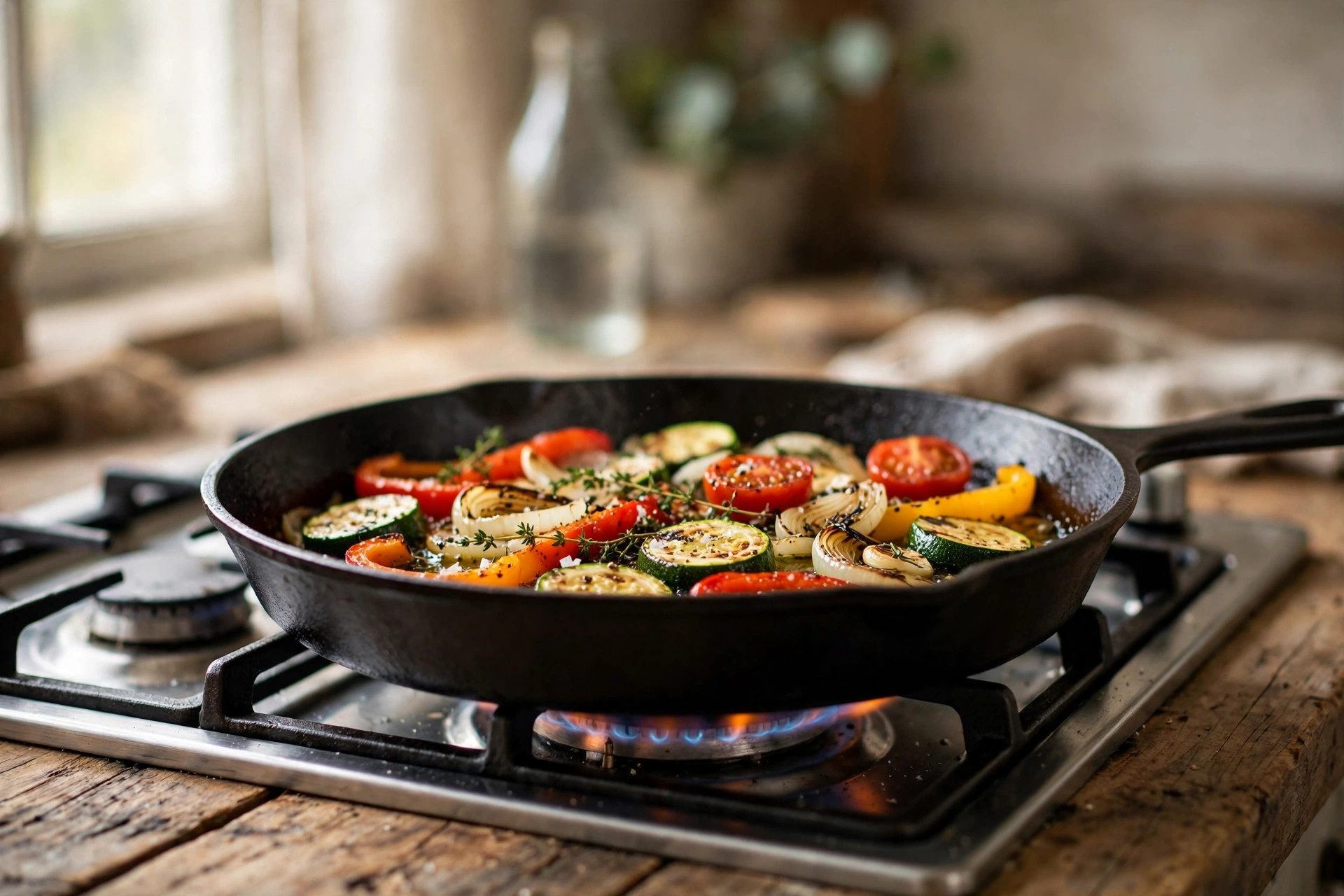
The pan was not hot enough, or not enough fat was used. Preheat, oil, and let food release before turning.
Rust spots
Water left on bare iron. Scrub the spot, dry on heat, and re-oil lightly.
Seasoning flakes
Too thick an oil layer during seasoning, or harsh detergents. Strip back and re-season thinly.
Uneven heating
Cast iron heats slowly and holds heat. Preheat longer than you would a thin pan, on moderate heat.
VIP pick — the winner is inside2027
Still deciding? Reveal the No. 1 pick.
The ranked roundup hides its winner until you tap — then shows the full ranking, the checks, and what to verify before buying.
Best Cast Iron Skillets →Browse all reviews
Independent · Reader-supported · No paid placements — every pick links to its full review.
 The winner is inside
Repair or replace?
Repair when the problem is a single worn part, a cleaning issue or a settings mistake — most cast iron skillets problems are. Replace when the core structure, coating or motor is failing, when spare parts are unavailable, or when repair costs approach the price of a new unit. Safety faults — damaged cords, cracked housings, electrical smells — always mean stop using the item and replace it.
Frequently asked questions
Can I wash cast iron with soap?
A little mild soap is fine on a well-seasoned pan. Dry it on heat and oil lightly afterward.
Is cast iron good for induction?
Yes — iron is magnetic. Check that the base sits flat on your hob.
How do I season a skillet?
Thin oil layer, heated past its smoke point, wiped almost dry, repeated. Thin layers build seasoning; thick ones flake.