Buying guide · Cast iron skillets
Cast Iron Skillets Buying Guide: Size, Seasoning and Care Before You Buy
A cast iron skillet is the cheapest way to buy serious heat retention — and the easiest pan to buy wrong, because its real costs are weight and maintenance, not money. This guide covers size, plain vs enameled iron, handles, cooktops, seasoning and care, so you buy once.
By The Kitchen Bench Research Team · Updated for 2027
What cast iron is actually good at
Cast iron's case is heat retention. A heavy iron pan holds its temperature when cold food hits it, which is why it is the usual recommendation for searing meat, baking cornbread, frying and finishing dishes in the oven. It goes from stovetop to oven without a second pan, and there is no coating to wear out — the surface can be re-seasoned for years.
Its limits are just as clear. It is heavy, it needs a wash-dry-oil routine, and it is not the right pan for cooks who want a lightweight, dishwasher-safe, nonstick daily driver. If that sounds like you, a nonstick or stainless pan is the honest answer, and no cast iron guide should talk you out of it.
Plain vs enameled iron
Plain cast iron builds a seasoning layer: oil polymerized onto the surface through cooking and care. It improves with use, needs maintenance, and is usually the cheaper option. Enameled cast iron has a glass-like coating instead — no seasoning to build, easier wiping, but a much higher price, and the enamel can chip if knocked or heated empty. They are different tools. Buy plain iron if you want the classic seasoning story and the lower price; buy enameled if you want cast iron's heat without the care routine and accept the cost and chipping risk.
Pick your size
Size is the first decision, and it follows household size more than ambition. An 8-inch skillet suits eggs, single servings and small sides, and it is noticeably lighter to lift. A 10-inch skillet is the couple's pan — most weeknight cooking without the full weight of a 12. A 12-inch skillet is the family default: room to sear without crowding, space for cornbread and oven dishes, and the weight to match — commonly around 7 to 8 lb before food goes in.
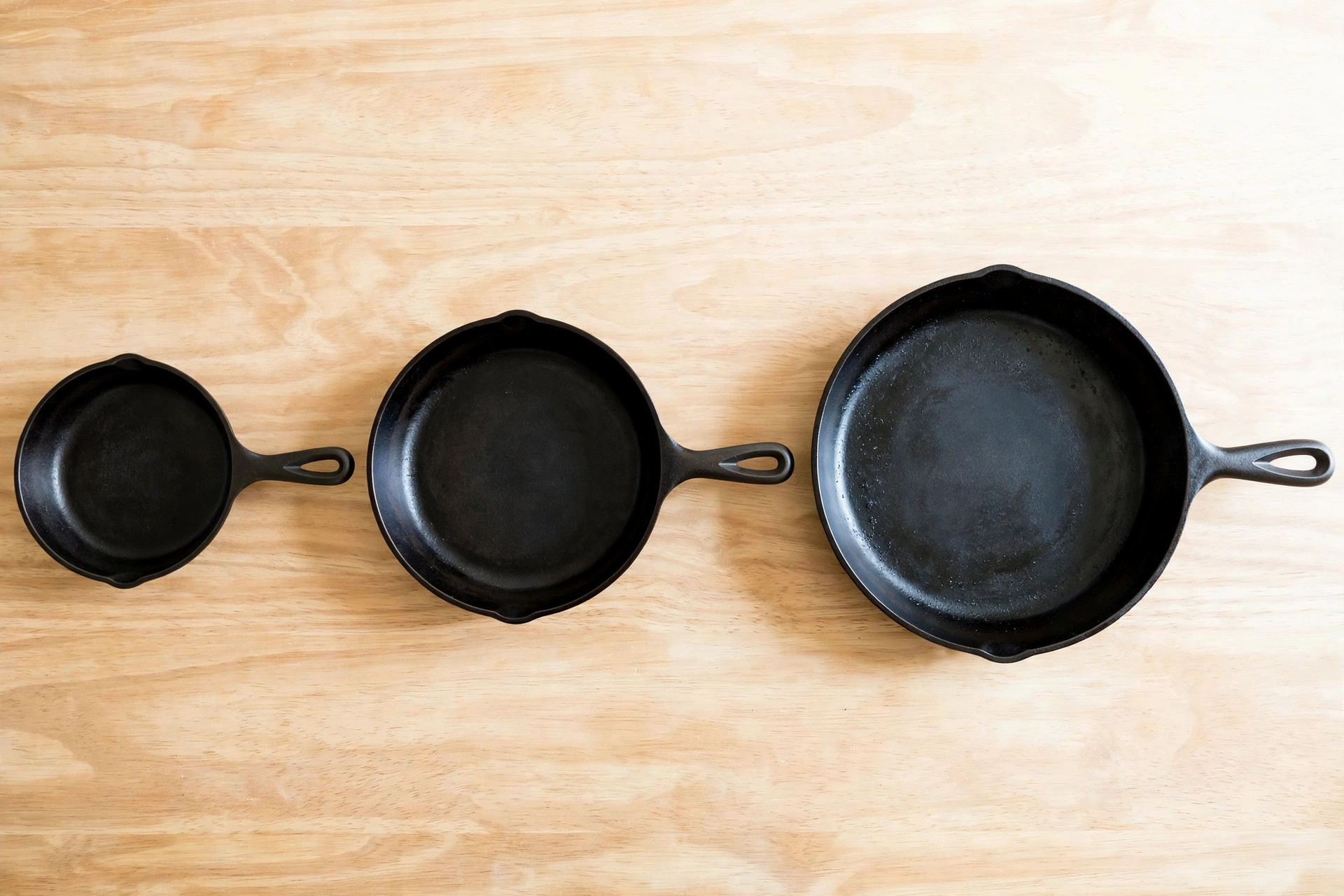
Crowding is the practical reason size matters. Meat that touches in the pan steams instead of searing, so a too-small skillet quietly ruins the result it was bought for. If you cook for three or more people, or you sear regularly, buy the 12 and accept the weight. If you cook mostly for one or two, the 10 will get used more often, which matters more than capacity on paper.
VIP pick — the winner is inside2027
Still deciding? Reveal the No. 1 pick.
The ranked roundup hides its winner until you tap — then shows the full ranking, the checks, and what to verify before buying.
Best cast iron skillets →Browse all reviews
Independent · Reader-supported · No paid placements — every pick links to its full review.
 The winner is inside
Weight is the real spec
Every other spec on a cast iron listing is secondary to weight, because weight decides whether the pan gets used or stays in the cupboard. A 12-inch plain iron skillet is a two-hand lift for many cooks, especially when full of food. Before buying, check the listed weight for your exact variant — retailer listings mix variants with different listed weights — and think honestly about lifting, wrist and grip limits, and where the pan will be stored. A pan you cannot lift comfortably is a bad buy at any price.
Handles, helper handles and pour spouts
One-piece iron handles get hot — that is normal, and it is the main practical surprise for first-time buyers. Keep an oven mitt or handle cover by the stove. A helper handle on the opposite side makes two-handed lifting far easier on larger skillets and is worth prioritizing at 12 inches. Pour spouts help with draining fat and sauces without a second vessel. None of these change cooking performance; all of them change how the pan feels to live with.
Cooktops: gas, electric, glass and induction
Cast iron works on gas and most electric cooktops. On glass or ceramic cooktops, lift rather than slide — dragging iron can scratch the surface — and heat and cool gradually. For induction, check the manual for your exact variant: many plain iron skillets are described as induction-compatible, but the claim belongs to the variant, not to cast iron in general. Never use cast iron in a microwave.
Seasoning and care, without the mythology
Pre-seasoned means the maker applied an initial oil layer. It does not mean permanently nonstick. The routine that keeps a pan good is short: hand wash, dry immediately and thoroughly, rub with a very light coat of oil after every wash, and store dry. What harms seasoning is equally short: dishwashers, metal scouring pads, harsh detergents, soaking, and long simmers of very acidic food. Regular cooking with fats builds the surface over time; aggressive scrubbing works against it.
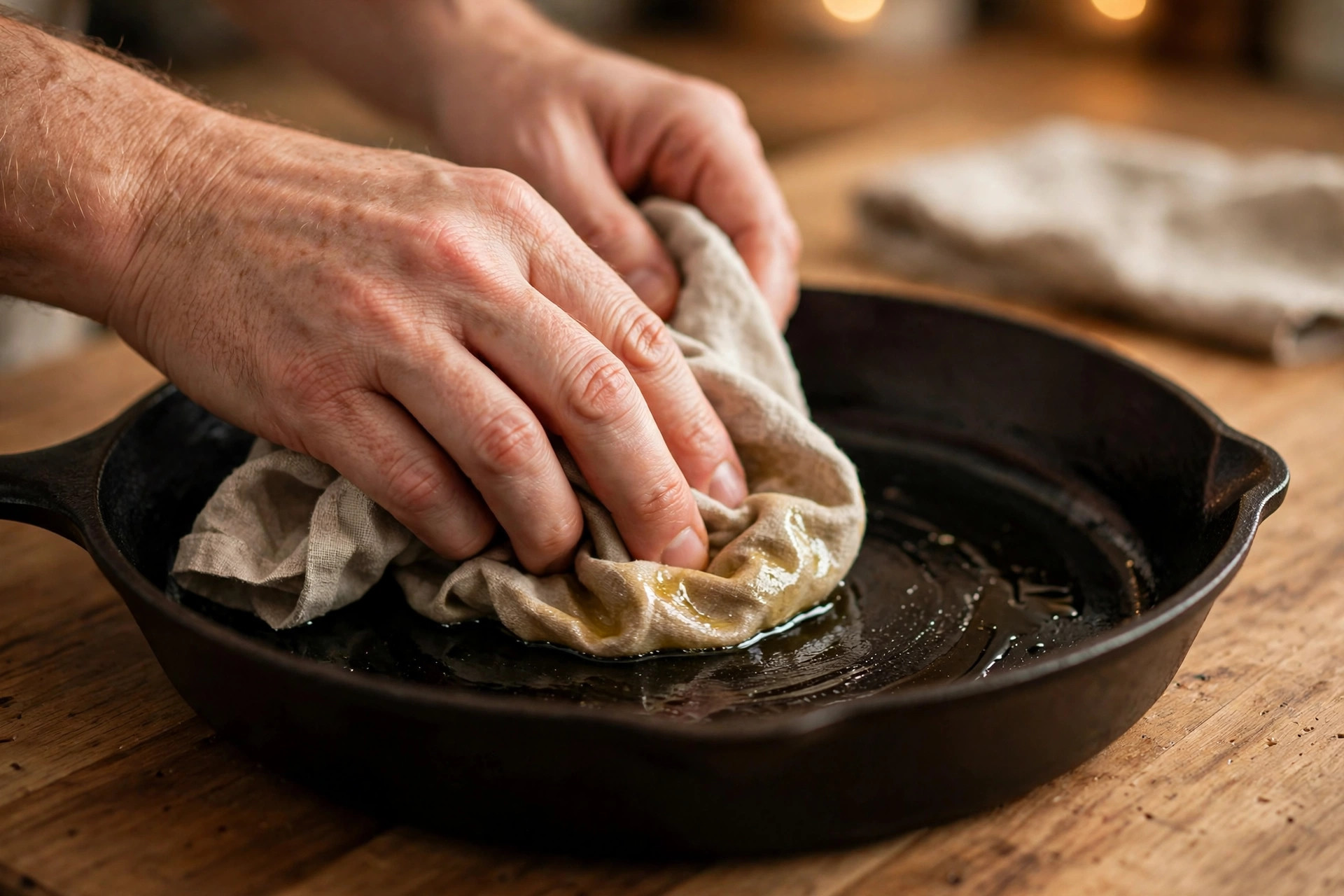
Rust is not a death sentence for plain iron. Surface rust usually scrubs off, and the pan re-seasons with thin oil coats. Deep pitting is different — check the maker's guidance before continuing to cook with a badly pitted pan.
Bench pick
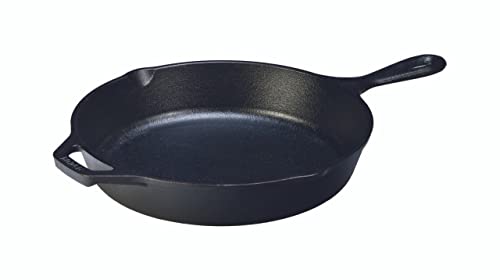
Lodge Cast Iron Skillet, 12 Inch
The budget end of real cast iron: plain iron, pre-seasoned by the maker, without an enamel coating to chip or a premium brand price. Lodge states it is made without PFOA or PTFE and lists stovetop, oven, grill and campfire use. The trade-offs are the ones this guide describes — about 7.9 lb, a hand-wash routine, and handles that get hot.
Frequently asked questions
Can I put a cast iron skillet in the dishwasher?
No. Dishwashers, metal scouring pads and harsh detergents harm seasoning. Hand wash, dry immediately and thoroughly, and rub with a very light coat of oil after washing.
Is a pre-seasoned skillet nonstick?
No — pre-seasoned is not the same as nonstick. The maker applied an initial oil layer; the surface improves with regular cooking and proper care, but it needs maintenance.
Can I use cast iron on induction?
Many plain cast iron skillets are described as induction-compatible, but check the manual for your exact variant before buying for an induction hob.
What if my skillet rusts?
Surface rust is usually recoverable: scrub it off, dry the pan completely, and re-season with thin coats of oil. If rust is deep or pitted, check the maker's guidance before continuing to cook with it.
Should I buy plain or enameled cast iron?
Plain iron builds a seasoning layer over time and is usually cheaper; enameled iron skips seasoning but costs more and its enamel can chip. They are different tools, not a better and worse version of the same pan.
How this guide was put together
This guide is spec-first and source-linked: maker statements are labelled as maker statements, retailer figures are labelled as retailer figures, and where sources disagree, the page says so. It does not claim hands-on laboratory testing, a price, or a rating. Sources for the featured pick include the Lodge use-and-care sheet and the retailer listing for the commonly listed 12-inch model.