The Kitchen Bench
COSORI Electric Gooseneck Kettle Review (2027)
An evidence-based look at the COSORI Electric Gooseneck Kettle: what it is, what to check before buying, who it suits, and the alternatives worth comparing.
By The Kitchen Bench Research Team · Updated for 2027 · Independent · Reader-supported · No paid placements
✓ Specs checked
✓ Claims verified
✓ No paid placements
✓ Sources cited
On this page
- 01Bench take
- 02What this product is
- 03Inside the electric kettle
- 04Pros and cons
- 05Key decisions for this category
- 06What to verify before buying
- 07How to buy it right
- 08Common mistakes to avoid
- 09Who it suits — and who should skip it
- 10Also consider
- 11In this category
- 12Frequently asked questions
- 13Ready to buy?
Bench take
The COSORI Electric Gooseneck Kettle is COSORI’s entry in the electric kettles category. On the category’s key decisions — capacity, variable temperature, pour control, limescale — it deserves a place on any shortlist, provided the checks below confirm it fits your kitchen, your batch size and your care tolerance. This review does not claim hands-on laboratory testing: it assesses the product from its category, its maker’s line and the specifications buyers should verify on the manufacturer sheet for the exact variant they are buying.
Check price on Amazon →Compare all electric kettles
Prices and availability change — the retailer page shows the current price for your exact variant. If the variant, size or colour differs from what you wanted, do not order it on price alone.
What this product is
An electric kettle boils water faster than a stovetop and, with variable temperature, at the right heat for tea and coffee. Capacity, pour control and limescale handling are what separate a good kettle from an annoying one. Within that category, the COSORI Electric Gooseneck Kettle sits as COSORI’s offering. The name itself tells you the most reliable facts — brand, product line and, where stated, size or capacity. Anything beyond that — exact dimensions, materials, warranty terms, care instructions — should be confirmed on the manufacturer sheet for your exact variant, because retailer listings for the same product frequently disagree.
Inside the electric kettle
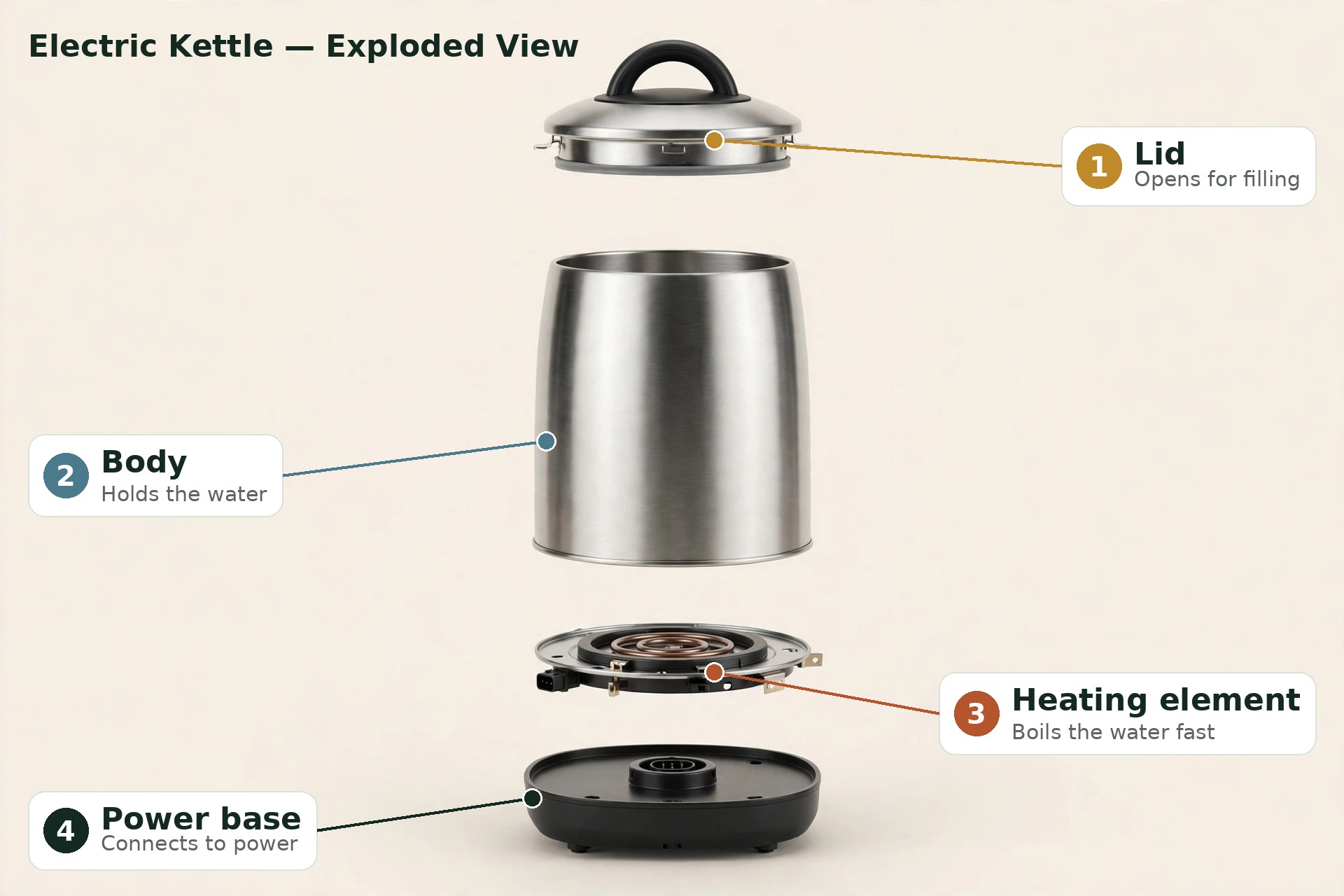
Illustrative exploded view — parts shown separated so you can see how it fits together. Not a photo of this exact product.
Key decisions for this category
Capacity
A large kettle boils more than you need and wastes energy; a small one means refilling. Size for your usual pot or round of drinks.
Variable temperature
Tea and coffee taste better at different temperatures. If you brew green tea or pour-over, variable control is worth it; for black tea alone, a simple boil is fine.
Pour control
A gooseneck pours slowly and precisely for pour-over; a standard spout pours fast for tea. Match the spout to your brewing.
Limescale
A removable filter and a wide opening for descaling keep a kettle fast and clean in hard-water areas.
What to verify before buying
Before you buy the COSORI Electric Gooseneck Kettle
- ✓ Capacity for your usual round
- ✓ Whether you need variable temperature
- ✓ Spout style for your brewing
- ✓ Filter and opening for descaling
Where the manufacturer sheet and a retailer listing conflict, this site follows the manufacturer sheet and flags the conflict. Never buy a electric kettle on a single specification from a single listing.
Pros and cons — at a glance
These are the honest trade-offs for this type of electric kettle, not a score. The strengths are what the category does well when the size and care needs fit; the watch-outs are the checks that decide whether this particular electric kettle fits your kitchen.
What it does well
- ✓ Fits the electric kettles use case when capacity and variable temperature are checked first.
- ✓ From COSORI, a maker whose line is built around this category — spare parts, care guidance and variant information are easier to verify than for a no-name listing.
- ✓ The name states the key facts (brand, line and, where stated, size) — so you can match it to the manufacturer sheet before ordering.
What to watch
- ✗ Slow boiling — check this before buying, not after unboxing.
- ✗ Kettle keeps switching off early — check this before buying, not after unboxing.
- ✗ Water tastes off — check this before buying, not after unboxing.
- ✗ Retailer listings for the same product frequently disagree on size, capacity or care — verify the exact variant on the manufacturer sheet.
How to buy it right — in 5 steps
- 1. Measure first. Check your counter, hob, cupboard and storage against the manufacturer dimensions for the exact variant — not the roundup photo.
- 2. Match the batch. Size and capacity should fit your usual cooking, not your largest party. A electric kettle that is too big wastes space; one that is too small forces second batches.
- 3. Check the variant. Colour, size and included accessories change the price and the fit. Confirm the variant name on the retailer page matches the one you checked.
- 4. Run the verify checks below. Capacity for your usual round; Whether you need variable temperature; Spout style for your brewing; Filter and opening for descaling. If any check fails, pick an alternative from the list below instead of hoping it will work out.
- 5. Check returns before ordering. Confirm the retailer return window for your variant, so a wrong size or a damaged arrival is a swap, not a loss.
VIP pick — the winner is inside2027
Still deciding? Reveal the No. 1 pick.
The ranked roundup hides its winner until you tap — then shows the full ranking, the checks, and what to verify before buying.
Best Electric Kettles →Browse all reviews
Independent · Reader-supported · No paid placements — every pick links to its full review.
 The winner is inside
Common mistakes to avoid
Slow boiling
Limescale on the element is the usual cause. Descale regularly in hard-water areas.
Kettle keeps switching off early
A faulty thermostat or heavy scale. Descale first; if it persists, the thermostat is failing.
Water tastes off
A new kettle needs a few boils and rinses. Persistent taste usually means scale or a dirty filter.
Drips when pouring
A poorly designed spout or overfilling. Pour slowly and fill below the maximum line.
Who it suits — and who should skip it
Best for
Cooks choosing electric kettles who prioritise capacity and variable temperature, and who have verified the product’s size, capacity and care needs against their kitchen.
Skip if
You need a different size or capacity, you cannot meet its care or cleaning needs, or the verified specifications do not match your hob, counter or storage. In that case, compare the alternatives below before deciding.
Also consider
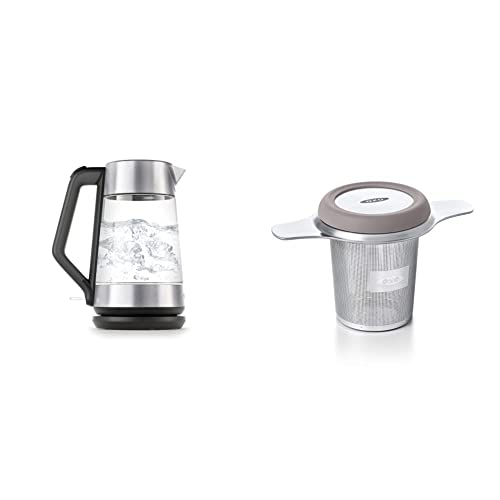
Electric Kettles
Cuisinart Perfectemp Cpk 17
Full review — what to verify before buying, who it suits, and the alternatives worth comparing.
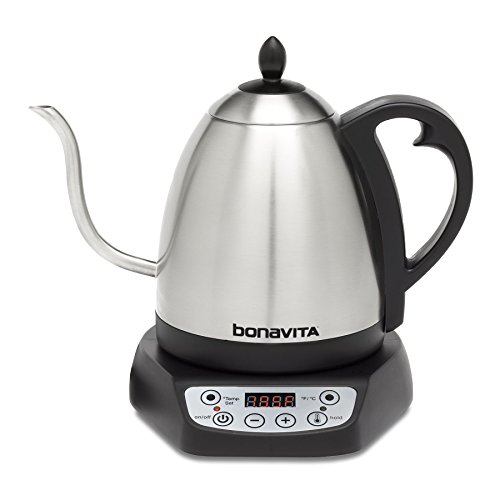
Electric Kettles
Fellow Stagg Ekg
Full review — what to verify before buying, who it suits, and the alternatives worth comparing.
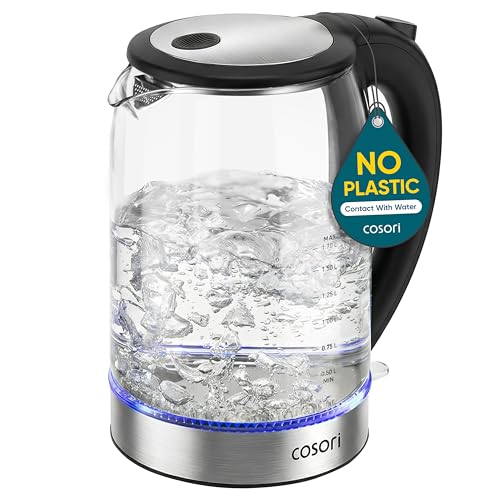
Electric Kettles
OXO Brew Cordless Glass Kettle
Full review — what to verify before buying, who it suits, and the alternatives worth comparing.
In this category
The full electric kettles cluster — the hub, the ranked best list, the buying guide, the problems-and-fixes article, and the use-case picks for this category.
Frequently asked questions
What temperature for green tea?
Around 175°F (80°C) — boiling water scalds green tea and makes it bitter.
How do I descale a kettle?
Vinegar or citric acid solution, boiled and left to sit, then rinsed well. Repeat in hard-water areas.
Is a gooseneck worth it?
For pour-over coffee, yes — control matters. For tea, a standard kettle is fine.
Ready to buy?
If the checks above pass — size, capacity, care and variant all match your kitchen — this is the point to order. If any check fails, go back to the alternatives below instead of buying on hope.